
ROLE
UX Design + Lead UI Design
Team
1 UX Lead
1 UX Designer
2 UI Designers
Designing a Care Operations Platform for the US Health Insurance Industry
Overview
The product is a healthcare analytics and care management platform designed to help providers manage large patient populations under value-based care programs. It supports care managers, administrators, and healthcare executives in monitoring patient risk, coordinating care interventions, and improving clinical outcomes.
The platform integrates multiple healthcare data sources and uses AI-driven risk stratification to help teams identify high-risk patients earlier and intervene before conditions worsen.
Problem Statement
Care management teams were working across fragmented systems that made it difficult to track patient health risks and coordinate interventions effectively.

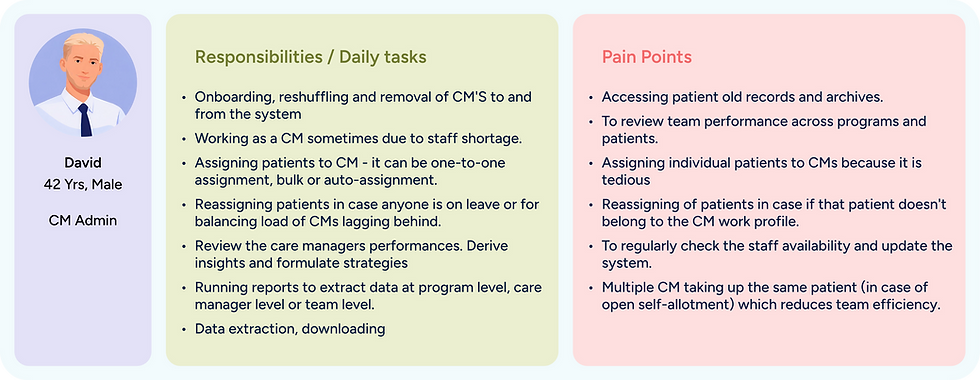
User Persona


US Value-Based Care Programs Ecosystem & Stakeholder Objectives
The tension between these three creates the core healthcare problem. Because of this misalignment:
Patients often delay care,
Providers treat patients late, Insurance costs increase.
This is why AI-based care management platforms exist, to detect patient risk earlier and intervene before hospitalization.
Member Listing
-
Combines KPIs with smart filters to help care managers quickly identify priority patients
-
Structured as a clean, scannable table for efficient data consumption
-
Collapsible side panel keeps filters accessible without cluttering the main view


Member Details
-
Color-coded indicators enable quick identification of risk and status
-
Visualized data reduces cognitive load and supports faster decision-making

Admin Dashboard
-
Patients are organized into risk buckets to support quick prioritization
-
Upfront legends improve readability and help users interpret data instantly
Design System

